WHITE HAIR
By Julia Wallis : April 2026
Understanding White Hair in Electrolysis Practice;
A Practical, Evidence-Based Guide for Practitioners and Clients
What is White Hair?
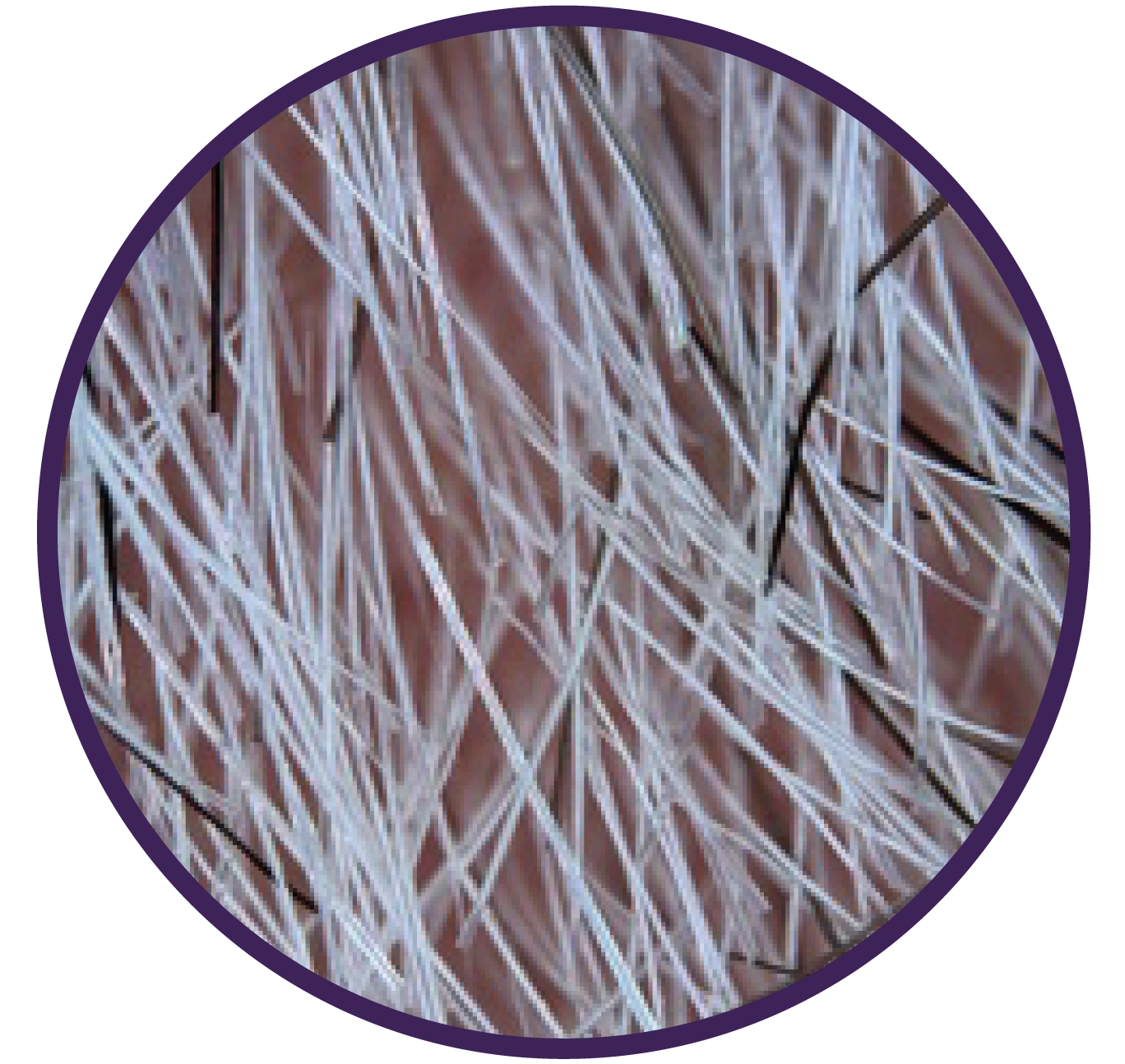
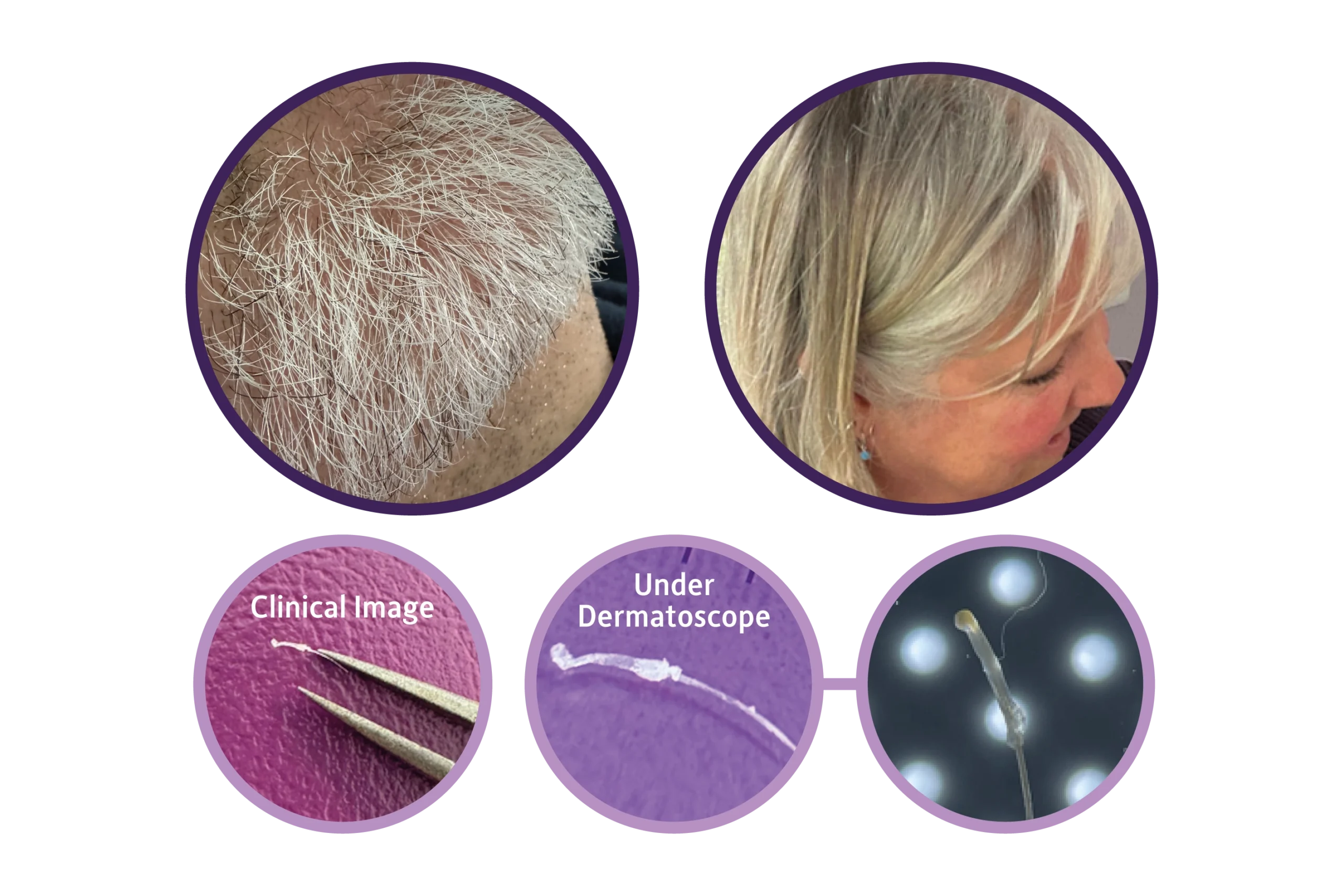
From a clinical perspective, white hairs present very differently to pigmented hairs. Pigmented hairs contain melanin within the cortex, have a more defined and structured root sheath, and appear dense and biologically active. In contrast, white hairs lack melanin, often present with a thicker, more opaque root sheath, and can appear coarser.
These differences are not just visual they reflect changes in follicle activity and melanocyte function. Understanding these structural variations helps practitioners assess and tailor treatment response and follicle behaviour more accurately.
Hair Loses Pigment; Can It Re-pigment?
White hair – the hair follicle loses its ability to produce melanin, the pigment responsible for hair colour. Traditionally thought to be a permanent process linked purely to ageing.
However, in 1972 and confirmed in more recent research such as the study reported by the BBC from New York University suggests that pigment-producing cells (melanocyte stem cells) may not always be lost, but instead become inactive or stuck within the follicle. https://www.bbc.co.uk/news/health-65309374
In some cases, the system responsible for hair colour is still present but not functioning optimally. For electrolysis practitioners, this is an important shift in understanding, as it supports the idea that hair follicles are dynamic, responsive biological structures rather than static ones.
Clinical Observations
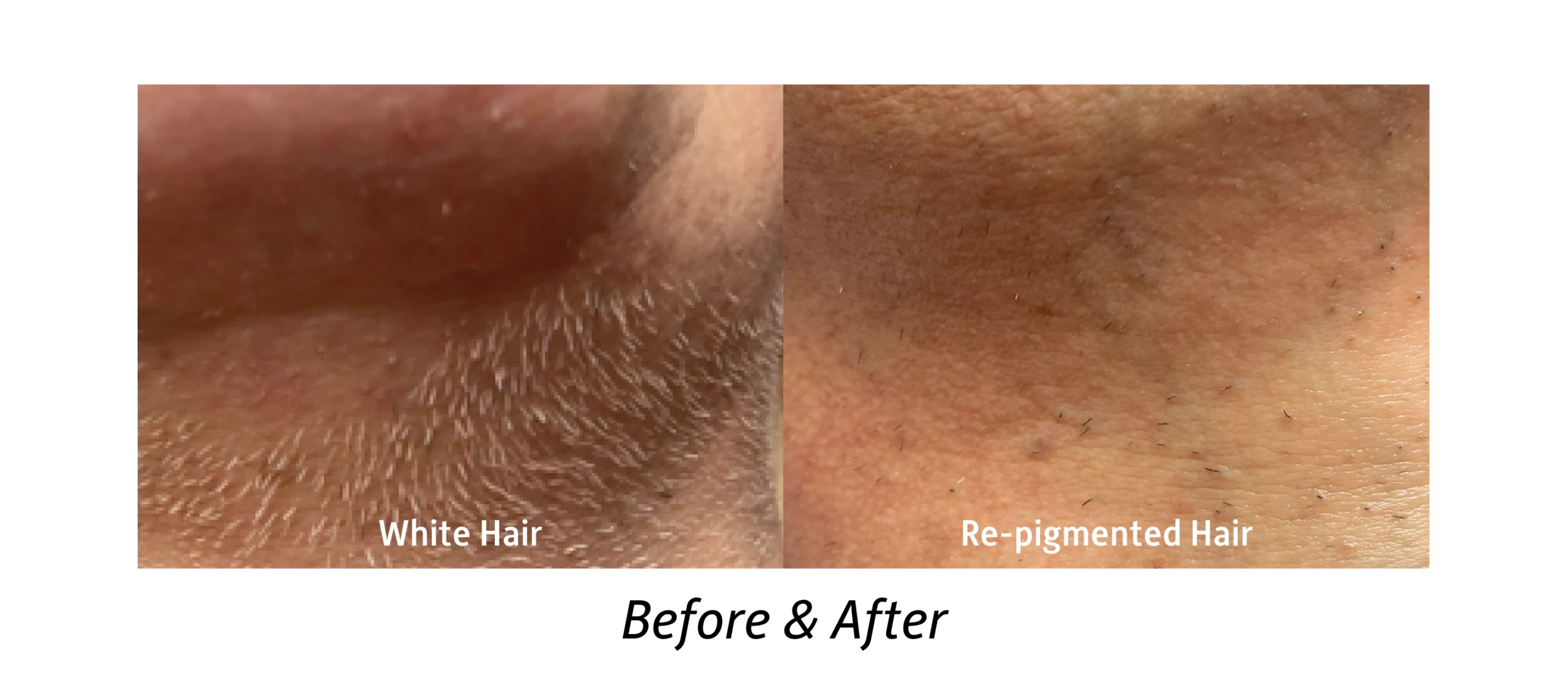
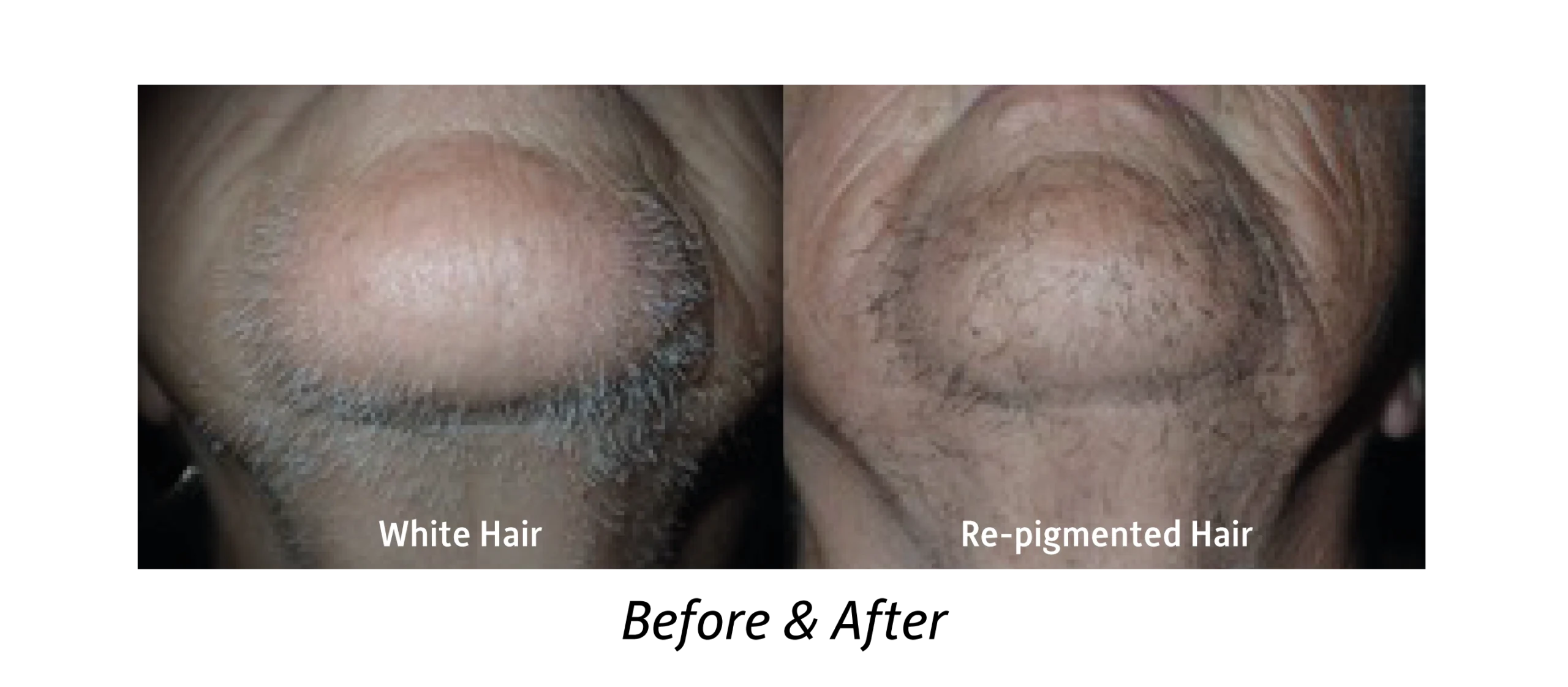
In my own clinical work as an Electrologist, I have observed a consistent and interesting pattern in clients with white facial hair.
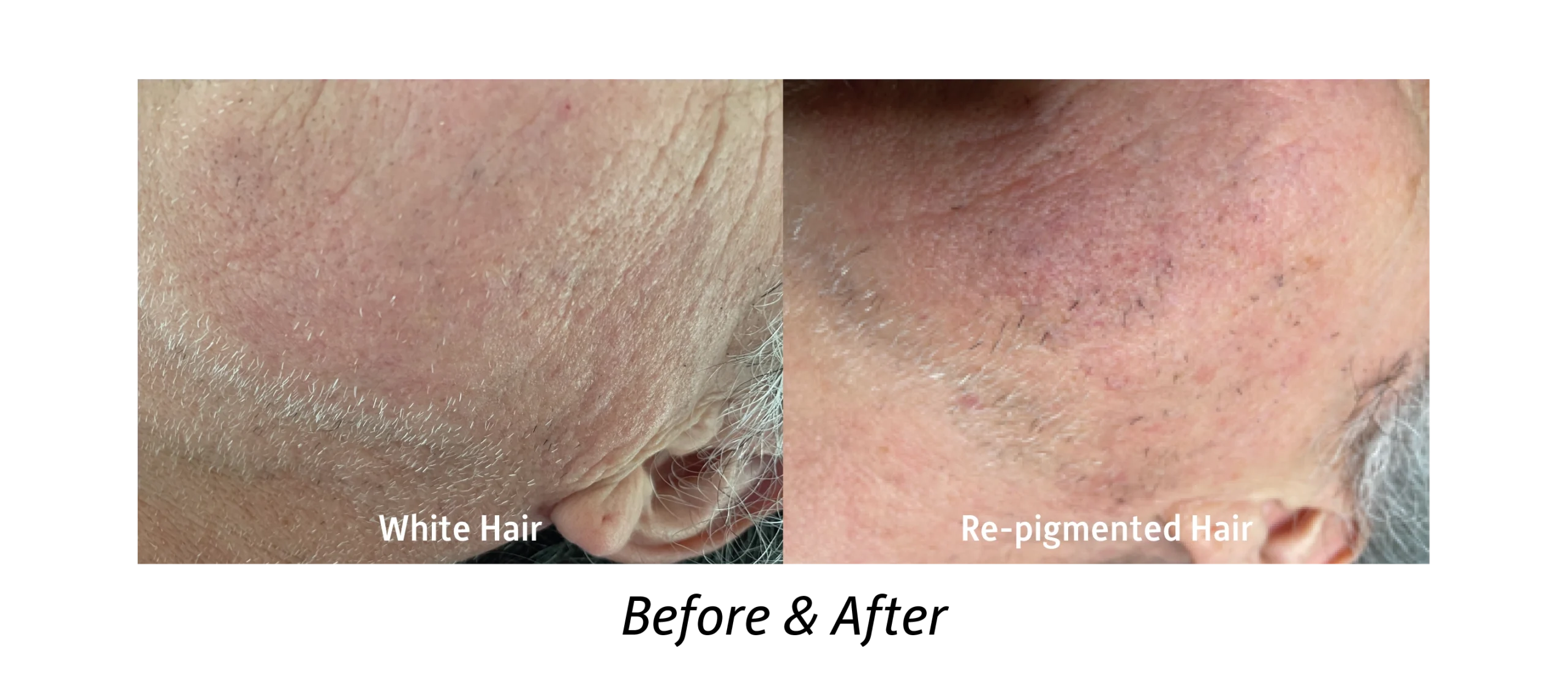
After treating white hair follicles and permanently removing them with electrolysis, I have noticed during further treatments that surrounding follicles, what I describe as “next-door neighbours” start to enter a new growth cycle as follows:
- In the anagen (growth) phase, Two-colored hairs (top ½ white and lower ½ dark) and others fully pigmented (dark again).
- This showed that melanin pigment has returned in the surrounding hairs.
Examples; White Facial Hair, Next Growth Cycle Re-pigmented
Skin Tissue Healing
Electrolysis works by delivering a controlled targeted micro-injury into the follicle. It achieves this by:
- Triggering the body’s natural healing response
- Initially increasing the blood supply (erythema) and Histamine response.
- Forming new Blood Vessel (Angiogenesis)
- Creating tiny crusts /scabs (skins natural plaster)
- Producing Collagen and Elastin.
Hair follicles and the surrounding skin tissue are amazing complex, regenerative structures involved in wound healing and skin repair.
They also contain light-sensitive receptors (opsins), meaning they play a role in the body’s interaction with light and environment cycle.
Surrounding Follicles, Why they Re-Pigment?
The localised healing response enhances the follicular environment and Improves cellular signalling supporting melanocyte activity in neighbouring follicles.
As a result, hairs that were already programmed to grow in the next growth cycle in these cases emerge with restored pigment.
It is as though the hair is being given another opportunity to behave in a more youthful way!
When I discuss this with clients, it is important to provide clear, balanced information:
- Hair grows in cycles,
- New hairs appearing does not mean treatment has failed
- Pigmentation varies on surrounding follicles condition and environment
- In some cases, two-toned or darker hairs may appear as part of a new growth cycle.
Loss of Pigment causes – (Ageing & Premature Ageing)
Hair pigmentation depends on:
- Melanocyte Stem Cells (McSCs.)
- Mitochondrial energy production,
- A well-regulated follicle environment.
- As we age, these systems can become less efficient.
A 2023 Nature study highlighted that melanocyte stem cells can become immobilised within the follicle, preventing them from maturing into pigment-producing cells…
This leads to white hair!
In addition to natural ageing, premature whitening of hair can occur due to:
- Chronic stress (activating the sympathetic nervous system)
- Oxidative stress and cellular damage
- Nutrient and mineral imbalances (e.g. copper)
- Hormonal or thyroid dysfunction
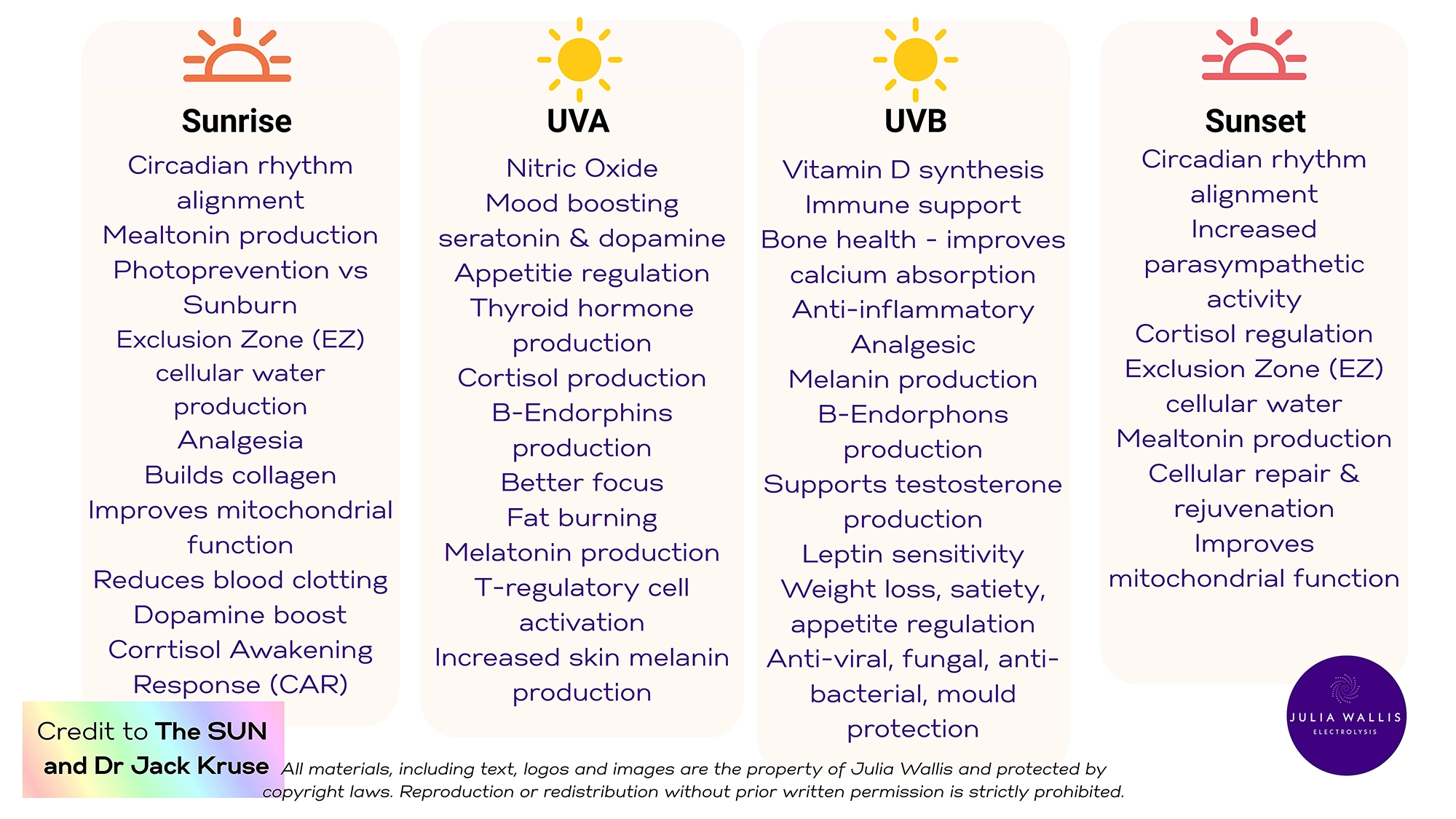
- Disrupted circadian rhythm and poor light exposure
- Reduced mitochondrial energy production
Stress can deplete melanocyte stem cells, leading to pigment loss.
Importantly, research shows that stress-related ‘greying’ may be reversible if the underlying cause is addressed.
https://elifesciences.org/articles/70584
This supports the idea that the body is not simply ageing, but adapting to its internal and external environment. When resources are limited, pigment production is NOT prioritised.
What we may observe:
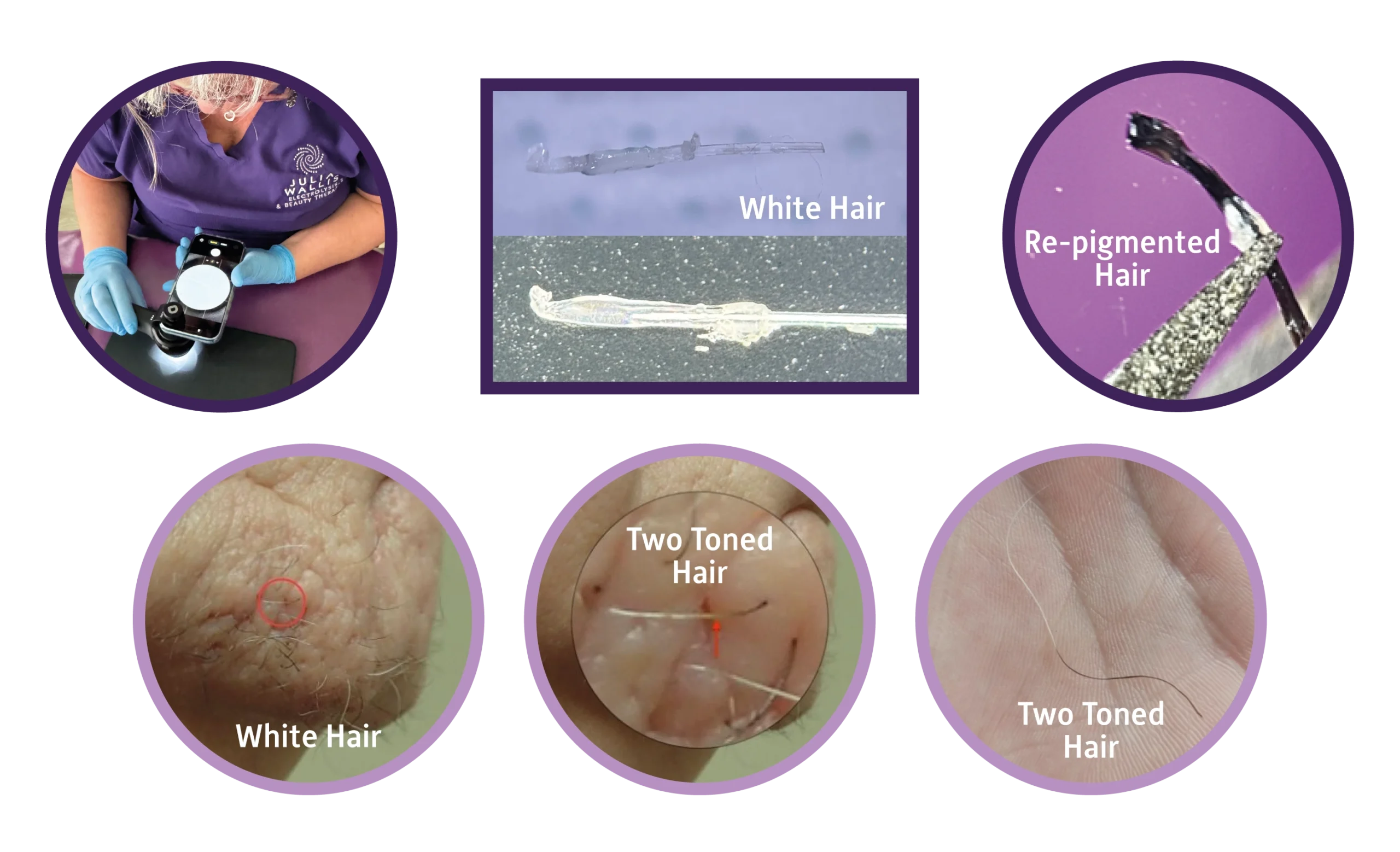
Dermoscopy photos of hair following epilation from the follicle with Electrolysis.
Differences in root sheath structure between white and pigmented hairs:
- Two-toned hairs
- Pigmented hairs in previously white areas.
- Variations in follicle response depending on skin condition and overall health
Careful observation and documentation of these patterns can contribute to a deeper understanding of follicle behaviour.

Highlighting Important Things
For Electrolysis Practitioners:
- Understanding hair growth cycles
- Observing follicle behaviour closely
- Communicating clearly with clients
For Clients:
- Offer reassurance that hair changes are part of a complex biological system.
- Variations in colour and growth can occur naturally.
Ultimately, hair follicles are not passive structures they are active, responsive, and influenced by both local treatment and a balanced overall health and wellbeing.
Supporting Health; Through a Quantum Biology Lens (behaviour of electrons & protons within molecules there are practical, evidence-aligned principles that support skin, follicle and hair health:
- Reduce chronic stress to protect melanocyte stem cells
- Support circadian rhythm – natural light exposure, good sleep patterns, hydration https/juliawallis-electrolysis.co.uk/hydration-beyond-water/ (hydration guide)
- Mitochondrial health through lifestyle (movement, recovery, seasonal nutrition including minerals )
- Reduce inflammation and support skin health
When the body is well-supported, it has more capacity to maintain functions like hair pigmentation.
Lighting
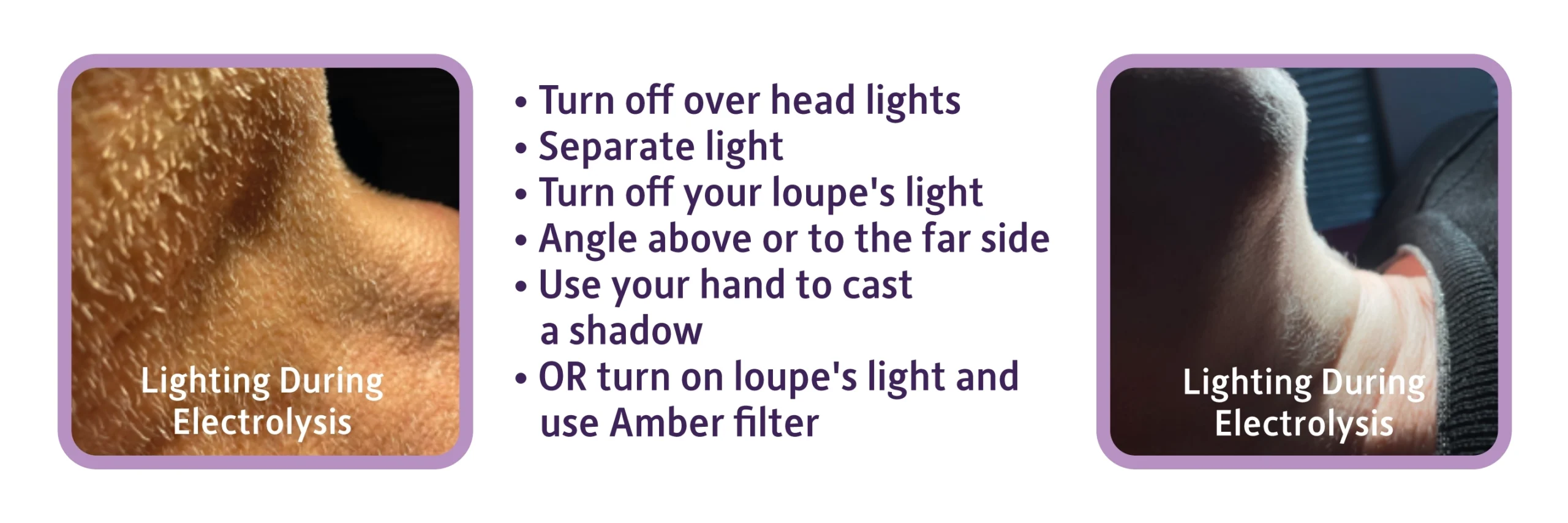
Lighting during Electrolysis to show up white and light coloured fine hairs:
Conclusion
White hair is a natural and often permanent part of ageing.
However, both scientific research and clinical observation suggest that the process is more dynamic than previously understood.
Pigment loss may result from dysfunction rather than complete loss of cells.
The follicle environment plays a key role in hair behaviour and in some cases, repigmentation may occur as l have observed in my clinic.
For electrolysis practitioners, this highlights the importance of:
- Understanding hair growth cycles
- Observing follicle behaviour closely
- Communicating clearly with clients
- For clients, it offers reassurance that hair changes are part of a complex biological system.
- Variations in colour and growth can occur naturally.
Ultimately, hair follicles are not passive structures they are active, responsive, and influenced by both local treatment and a balanced overall health and wellbeing.
References and Citations
Melanin the Master Molecule by Arturo Solis Herrera (Author).
References (Harvard Style).
BBC News (2023) Scientists may have discovered why hair turns grey. Available at:
https://www.bbc.co.uk/news/health-65309374
Zhang, B. et al. (2023) Dedifferentiation maintains melanocyte stem cells in a dynamic niche. Nature.
The Guardian (2023) Scientists may have discovered why hair turns grey. Available at:
https://www.theguardian.com/science/2023/apr/19/scientists-may-have-discovered-why-hair-turns-grey?utm_source=chatgpt.com
Rosenberg, A.M. et al. (2021) Quantitative mapping of human hair greying and reversal. eLife. Available at: https://elifesciences.org/articles/70584
Zhang, B. et al. (2020) Hyperactivation of sympathetic nerves drives depletion of melanocyte stem cells. Nature.
Scientific American (2020) Gray hair can return to its original color-and stress is involved, of course. Available at: https://www.scientificamerican.com/article/gray-hair-can-return-to-its-original-color-mdash-and-stress-is-involved-of-course/
Slominski, A. et al. 2005 Hair follicle pigmentation. Journal of Investigative Dermatology.
Tobin, D.J. (2009) Aging of the hair follicle pigmentation system. International Journal of Trichology.
https://ai.hubermanlab.com/s/fSSCoW6n
All materials, including text, logos and images are the property of Julia wallis and protected by copyright laws.
Reproduction or redistribution without prior written permission is strictly prohibited.